If you’re wondering whether gum disease can go away on its own, the short answer is: no, but quick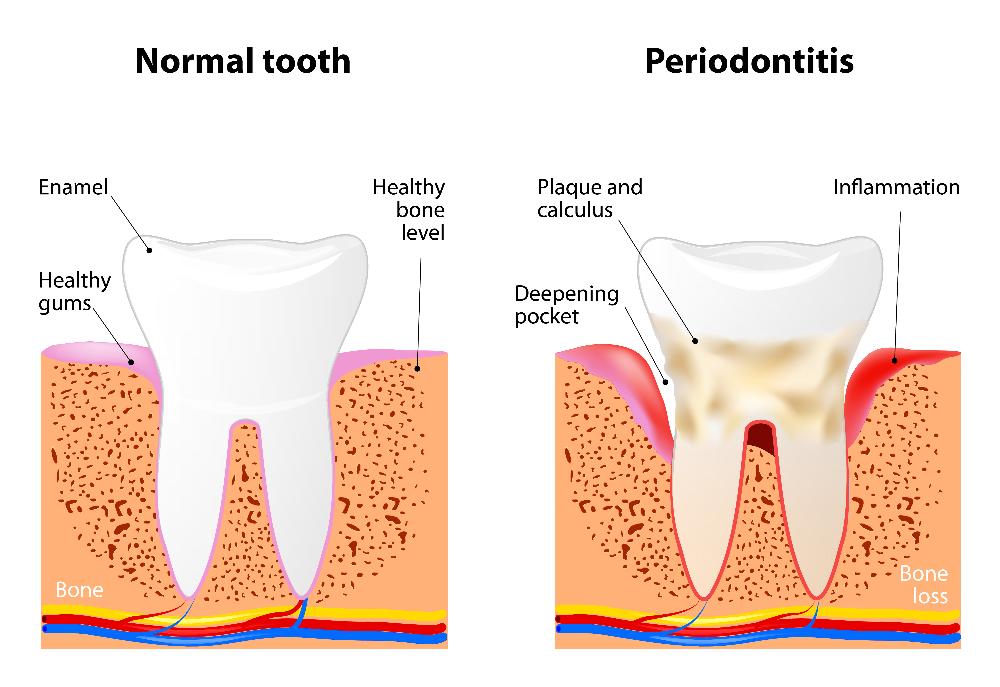 action in its early stages can reverse its effects at minimal cost and expense. With proper care, early gum disease can improve, and pockets can decrease. However, deeper periodontal damage usually requires professional treatment to manage.
What Pocket Depths Mean
Dentists measure periodontal pockets, what you’d call “the spaces between your gum and tooth,” in millimeters to assess gum health. Here’s what they’re looking for:
- 1–3 mm — Healthy gums, minimal risk.
- 4–5 mm — Early gum disease. Pockets at this depth respond well to deep cleanings and improved home care.
- 6–7 mm — Moderate periodontal disease. These pockets generally need professional treatment, like scaling and root planing, to reduce depth.
- 7+ mm — Advanced gum disease requiring more advanced therapy, possibly surgery
Can Gum Disease Be Reversed?
In its earliest stage, gingivitis, gum disease can be reversed with excellent brushing, flossing, and routine dental care. As pockets deepen and bone or connective tissue is lost, the disease can’t truly be reversed, but it can be stopped from progressing and stabilized with proper treatment.
How Does Dr. Justison Address Periodontal Pockets?
At our Wilmington dental office, Dr. Jason Justison and our expert team employ advanced tools, like the Solea® CO2 laser, to allow for precise, gentle periodontal treatment, rather than just chipping away tooth enamel and dentin with a drill. Solea laser therapy reduces bacteria and encourages healing with greater convenience than traditional methods.
Need a Dentist in Wilmington, DE?
If you'd like to learn more about gum disease in Wilmington, please feel free to contact Dr. Jason Justison and the friendly Justison & Gladnick Family Dentistry team to schedule a consultation.